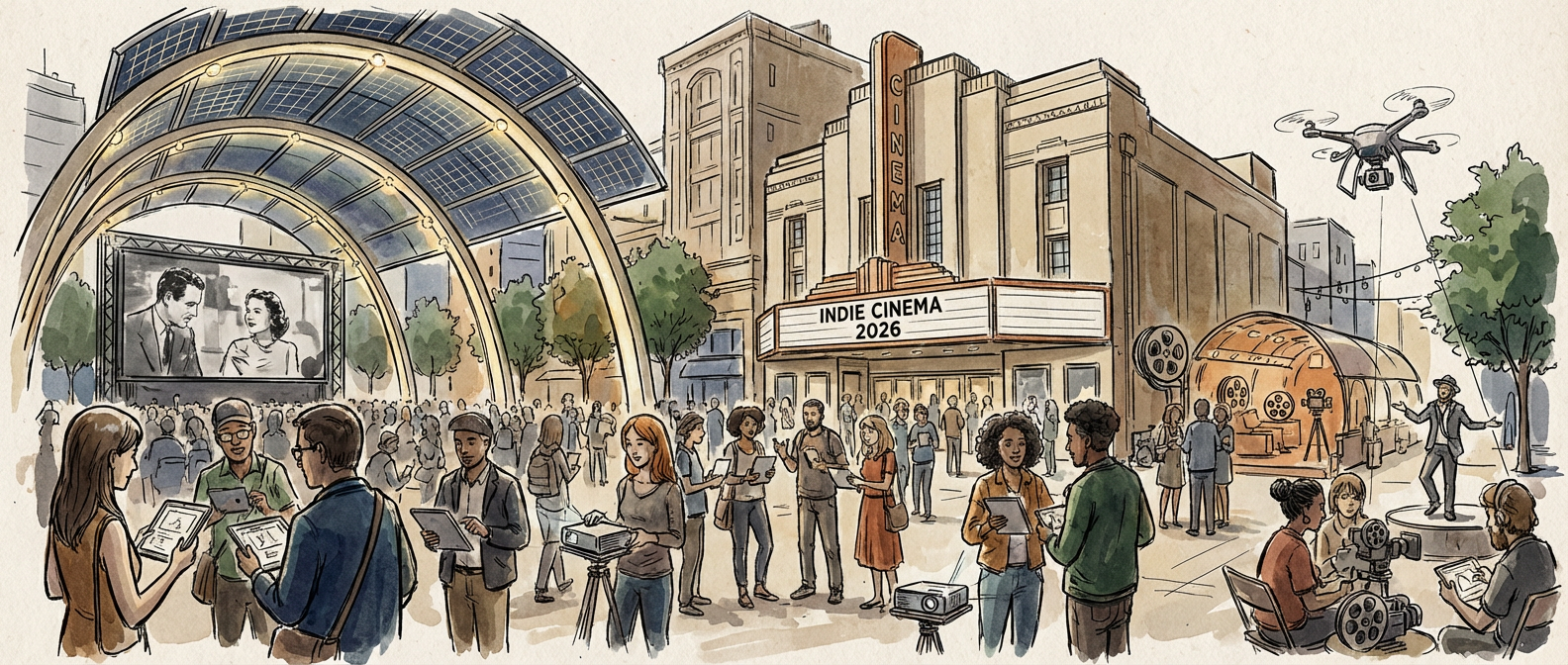
The Numbers Game: When Tradition Meets Digital Deluge
The Sundance Film Festival processed more than seventeen thousand submissions for its 2026 edition. That number would have seemed impossible during the festival’s scrappy origins in Park City. This astronomical increase reflects more than just cheaper filmmaking tools. It shows how independent cinema has completely repositioned itself within an entertainment world increasingly dominated by algorithmic distribution. Festival programmers used to be gatekeepers to theatrical release. Now they’re curators in a marketplace where streaming platforms compete for content from opening night onwards.

The traditional festival circuit operated on scarcity and exclusivity. Distributors would wait weeks or months after premieres to negotiate acquisition deals. Today’s reality is completely different: streaming services arrive at festivals with checkbooks ready, offering distribution agreements before the credits finish rolling on opening screenings. This acceleration transforms the festival experience from a leisurely courtship between filmmakers and distributors into something resembling a high-stakes auction house. The most compelling narratives might be snapped up before general audiences even glimpse them.
This shift raises some serious questions about independent cinema itself. When streaming platforms can guarantee immediate global distribution, does “independence” mean anything anymore? The answer isn’t in distribution mechanisms but in whether these new models preserve or compromise creative freedom.
The A24 Effect: Prestige as the New Punk Rock
A24’s transformation of independent cinema into a brand synonymous with cultural prestige has spawned countless imitators across the studio landscape. Everyone’s trying to replicate that company’s alchemy of arthouse sensibilities with mainstream appeal. This imitation game reveals both the commercial viability of challenging content and the inherent tension between artistic vision and market demands. Studios now deploy entire divisions to acquire and develop projects that mirror A24’s aesthetic of beautiful melancholy, psychological complexity, and visual sophistication.
The proliferation of A24-style boutique labels represents more than mere trend-following. It signals recognition that audiences hunger for content that respects their intelligence while delivering the emotional and visual richness traditionally associated with European art cinema. But this widespread adoption of the prestige independent model also creates its own form of homogenization. “Independent” cinema begins to feel surprisingly uniform in its pursuit of awards recognition and critical acclaim.
The comparison between today’s prestige indie landscape and the punk rock movement of the 1970s is pretty revealing. Just as punk’s rebellious energy eventually became commercialized and codified, independent cinema’s outsider status has been absorbed into mainstream industry practice. The question becomes whether this absorption strengthens or weakens the medium’s capacity for genuine innovation.
Documentary Renaissance: Truth in the Age of Infinite Content
Documentary filmmaking is experiencing an unexpected commercial renaissance in 2026. This surge is driven largely by streaming platforms’ insatiable appetite for non-fiction content that can compete with true crime podcasts and investigative journalism for audience attention. It’s a dramatic reversal from documentary cinema’s historically marginal commercial position, where theatrical releases were rare and financial success rarer still.
The streaming economy rewards documentary content for its relatively low production costs and high engagement potential. Platforms discovered that well-crafted documentaries generate intense viewer loyalty and social media conversation, making them valuable properties in an attention economy where cultural relevance often matters more than pure viewership numbers. This economic reality gives documentary filmmakers unprecedented creative freedom, as streaming services compete to identify the next cultural phenomenon.
But this commercial success creates its own challenges for the documentary form. The pressure to deliver binge-worthy content sometimes conflicts with the medium’s traditional commitment to measured investigation and contemplative pacing. Filmmakers must navigate between authentic storytelling and the entertainment industry’s demand for addictive narrative structures. That balance defines much of contemporary documentary practice.
International Cinema’s Global Moment
The Academy Awards’ recognition of “Parasite” catalyzed a broader cultural shift toward international cinema that continues reshaping film festival programming in 2026. English-speaking audiences show unprecedented openness to subtitled content, transforming what was once a niche market into a significant commercial opportunity. Film festivals now compete not just for American independent films but for international productions that might capture lightning in a bottle similar to Bong Joon-ho’s masterpiece.
This globalization of festival programming creates fascinating tensions between local cultural specificity and universal themes. Programmers must balance their desire to present diverse international voices against the practical reality that some stories translate more effectively across cultural boundaries than others. The result is a festival landscape increasingly sophisticated in its presentation of global cinema, yet sometimes constrained by what IndieWire film criticism might characterize as “festival-friendly” international content.
The comparison between today’s international film reception and the foreign film waves of previous decades reveals both progress and limitation. While contemporary audiences embrace international cinema with greater enthusiasm than their predecessors, this embrace often focuses on films that conform to specific aesthetic and narrative expectations developed through exposure to prestige television and streaming content.
The Democratization Dilemma: Film Schools Versus Social Media
Traditional film education faces an existential challenge as applications decline while young creators build substantial audiences through platforms like YouTube and TikTok. This shift represents more than a mere change in educational preferences. It reflects a fundamental reimagining of how cinematic storytelling develops and finds its audience. Young filmmakers increasingly question the value of formal education when social media platforms offer direct access to global audiences and immediate feedback on creative work.
The comparison between traditional film education and social media learning reveals complementary rather than competing approaches to cinematic craft. Film schools provide structured engagement with cinema history, theoretical frameworks, and collaborative production processes that remain difficult to replicate through online learning. Meanwhile, social media platforms offer real-time audience engagement and rapid iteration cycles that traditional education struggles to match.
This educational transformation influences festival programming as curators encounter work from creators who developed their skills outside traditional institutional frameworks. These filmmakers often bring fresh perspectives unburdened by conventional industry wisdom, yet sometimes lack the historical and theoretical grounding that enriches cinematic storytelling across multiple viewings and cultural contexts.
The convergence of these trends suggests that 2026 represents a defining moment for independent cinema, where technological democratization meets cultural globalization in ways that both expand and constrain creative possibilities. Festival programmers, critics, and audiences find themselves navigating a landscape where the boundaries between independent and mainstream, local and global, educational and autodidactic become increasingly permeable and productively complex.