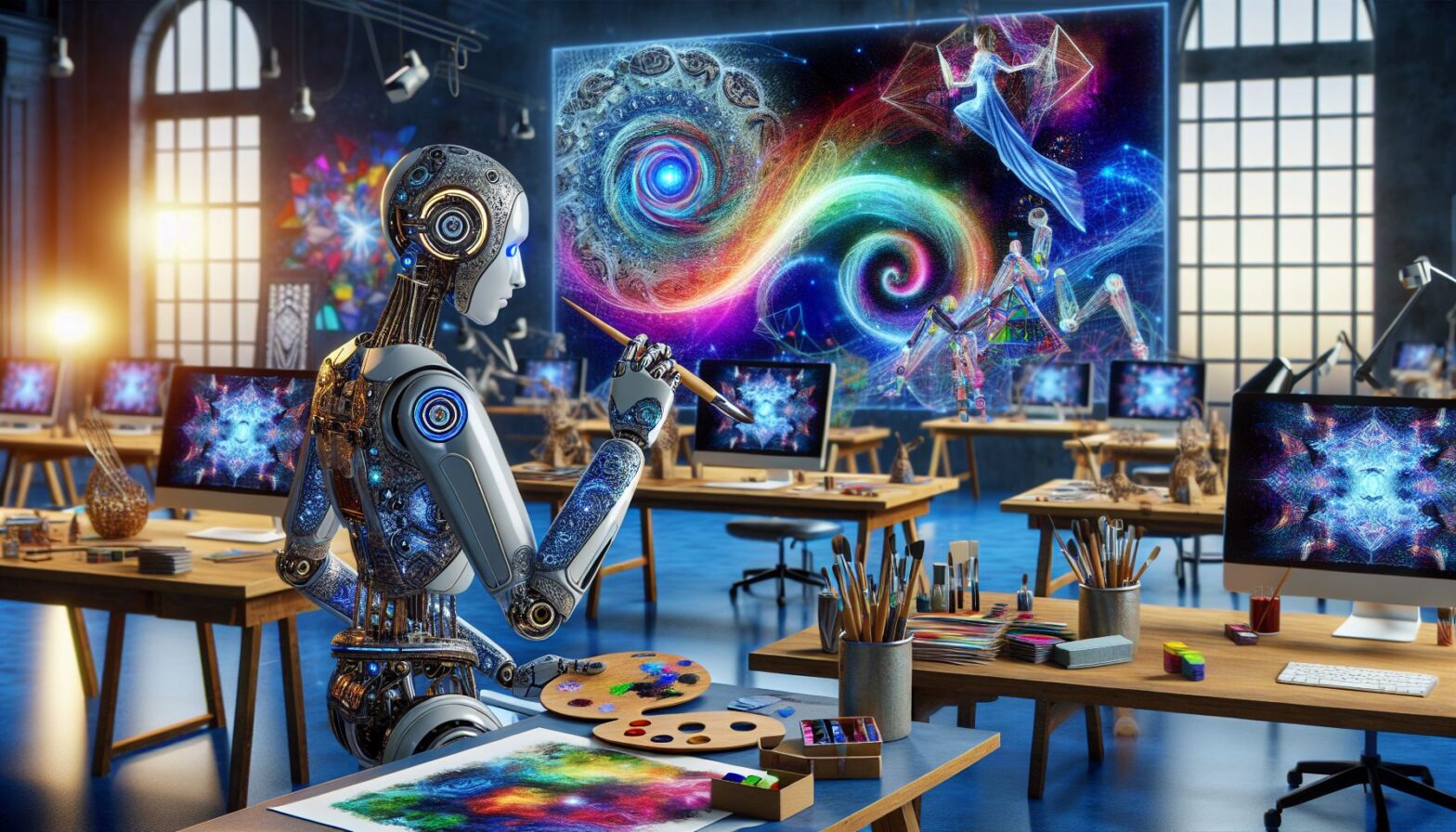
Welcome back, fellow tech enthusiasts! Today I want to talk about something that’s been on my mind lately—Artificial Intelligence in the creative arts. Let’s get nerdy about how AI algorithms are changing the game for artists, musicians, and writers, opening up possibilities that seemed impossible just a few years ago.
The Creative Confluence: Art Meets Algorithm
To many people, bringing algorithms into creativity feels like repainting the Mona Lisa with MS Paint. I get it—at first glance, it seems wrong, maybe even disrespectful. But here’s the thing: if you can look past that initial cringe factor, there’s something genuinely exciting happening here. We’re seeing an era where code becomes a paintbrush, where algorithms collaborate with human composers, and where the question isn’t “Should AI be involved?” but rather “What can we create together?”
I’m not talking about those awkward neural network memes from last year that made us all feel old. This is different. We’re watching a new kind of creative partnership emerge—one where AI and human artists are finding ways to work together that nobody saw coming. Sure, it raises questions about what creativity even means, but that’s part of what makes it so fascinating.
Of course, we can’t ignore the ethics conversations happening around all this. There are real concerns about originality, attribution, and what happens to human artists in this new landscape. These aren’t easy questions, and honestly, I don’t think we have all the answers yet.
Artistic AI: Brushes Built on Data and Intuition
Here’s where things get really interesting. AI art tools have moved way beyond simple filters or basic image generation. We’re seeing systems that can understand style, composition, even emotional tone in ways that would have seemed like science fiction not long ago.
Take something like DALL-E or Midjourney—these aren’t just randomly generating pixels. They’re trained on millions of images, learning patterns and relationships that even human artists might not consciously recognize. When you ask for “a melancholic sunset in the style of Van Gogh,” the AI isn’t just copying—it’s interpreting, combining elements it learned from Van Gogh’s work with its understanding of melancholy and sunsets.
What really gets me excited is seeing how human artists are using these tools. They’re not being replaced—they’re being amplified. A concept artist can explore dozens of visual directions in the time it used to take to sketch one. A illustrator can generate background elements while focusing their creative energy on character development.
Image, Style, Exploration: A New Aesthetic World
The variety of what’s possible now is pretty mind-blowing. I’ve seen AI create everything from photorealistic portraits to abstract expressionist pieces that genuinely moved me. The technology can mimic existing artistic styles with scary accuracy, but more importantly, it’s starting to develop what feels like its own aesthetic sensibilities.
Some of my favorite AI art pieces have this quality that’s hard to describe—they’re clearly not human-made, but they’re not trying to be. There’s something distinctly digital about them, a new kind of beauty that emerges from how machines process and interpret visual information. It’s like we’re discovering a new artistic medium, one that has its own rules and possibilities.
Tuneful Textures: AI’s Harmonious Collaboration with Music
Music might be where AI creativity really shines. I’ve been blown away by some of the compositions coming out of systems like AIVA and OpenAI’s MuseNet. These aren’t just random note generators—they understand harmony, rhythm, musical structure in sophisticated ways.
What’s fascinating is how AI approaches composition differently than humans do. It can process and combine musical patterns from vast databases of existing music, finding connections and possibilities that human composers might never consider. I’ve heard AI pieces that seamlessly blend baroque counterpoint with modern electronic elements, creating something entirely new but somehow musically coherent.