The Submission Surge and the Paradox of Accessibility
Walking through the snow-dusted streets of Park City this January, the energy feels different than it did even three years ago. The Sundance Film Festival has become something of a cultural lightning rod, drawing an unprecedented seventeen thousand submissions for slots that remain as coveted as ever. This surge is more than just numbers. It’s a fundamental shift in how stories reach audiences and how filmmakers think about their creative paths.
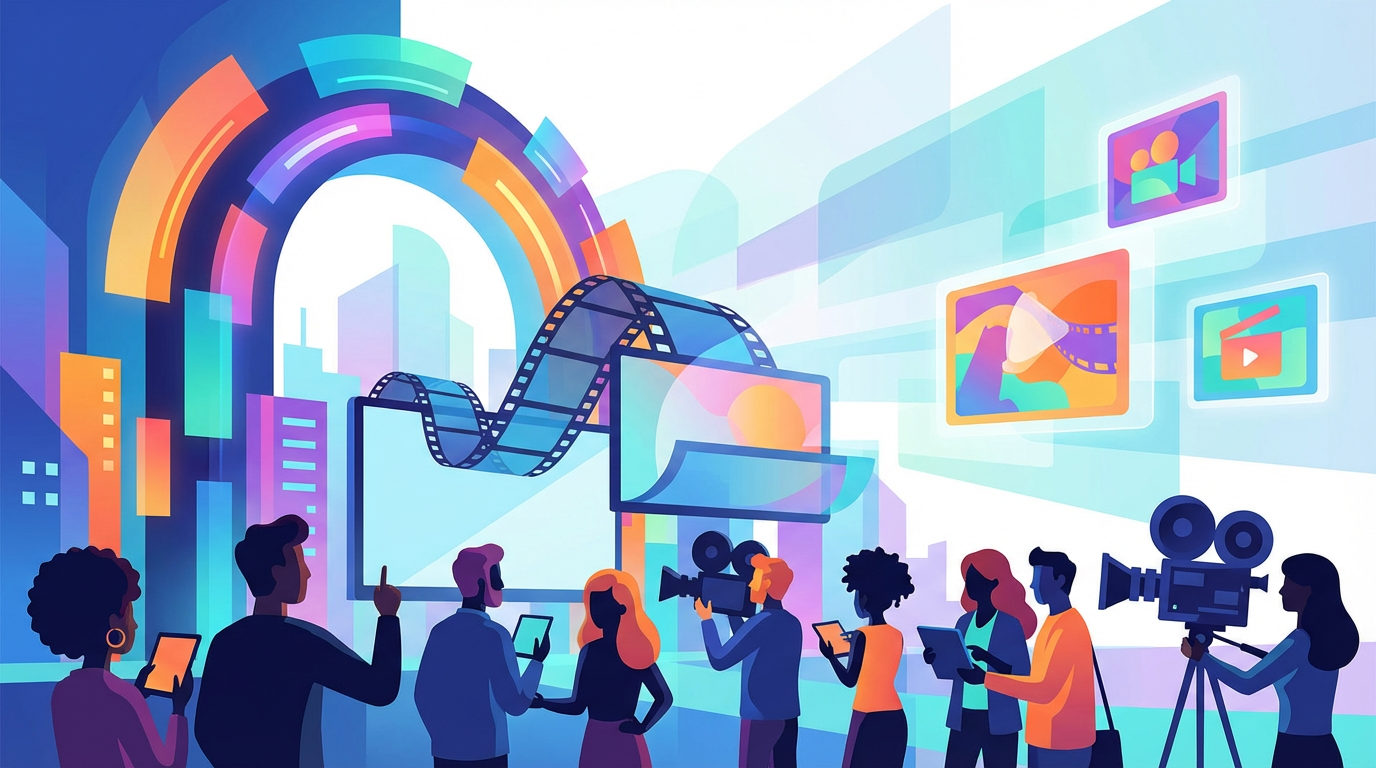
The democratization of filmmaking tools has crashed into an increasingly stratified distribution system, creating a weird paradox. Anyone with a smartphone can technically create a feature film. Meanwhile, the gatekeepers of prestige and commercial viability have consolidated their power even more. Festival programmers now sort through mountains of content that ranges from polished studio indies disguised as grassroots projects to genuine bedroom auteurs working with budgets that wouldn’t cover craft services on a traditional production.
This explosion of submissions has forced festivals to change their curation processes. They’re using algorithmic pre-screening tools and expanding their programming teams. The result? A more diverse slate of films, but also a more complex ecosystem where traditional notions of “independent” cinema blur beyond recognition. Honestly, I’m not sure anyone knows what “indie” even means anymore.
Day-One Deals and the Death of the Bidding War
The romance of the festival acquisition has been completely transformed. Those dramatic midnight bidding wars that once defined Sundance folklore are gone, replaced by a more clinical process where streaming platforms arrive with deals already structured before the first frame rolls. Major streamers now routinely offer acquisition packages on opening day, completely changing the festival experience for both filmmakers and distributors.
This shift has created a strange temporal compression where films exist simultaneously as festival darlings and streaming commodities. Directors find themselves promoting their work to audiences who might watch it on their phones within weeks, rather than the traditional theatrical release pattern that could stretch across months or years. The intimacy of festival screenings now feels like elaborate marketing events rather than genuine discovery moments.
The economic reality driving this change makes sense. Streaming platforms need constant content flow, and festivals provide curated, buzz-generating material that arrives pre-validated by critical audiences. For filmmakers, the guarantee of immediate distribution offers security. But it also removes much of the mystique and potential upside that made festival circuits legendary launching pads for careers. There’s something lost in the translation.
The A24 Effect and the Industrialization of Indie Aesthetics
Perhaps no single entity has reshaped independent cinema more dramatically than A24, whose approach to prestige filmmaking has been reverse-engineered and replicated across the industry. What began as a boutique distribution company has evolved into a template for how studios approach the intersection of art and commerce, creating a recognizable aesthetic that balances auteur sensibilities with market viability.
This influence shows up in festival programming that increasingly favors films with identifiable “indie” markers: specific color palettes, particular editing rhythms, and thematic preoccupations that signal sophistication without alienating mainstream audiences. Studios have learned to manufacture the authentic feel that once emerged organically from budget constraints and creative desperation.
The result is a curious homogenization of independent cinema, where films arrive at festivals already shaped by market expectations rather than purely artistic vision. Young filmmakers study A24 releases like film school textbooks, absorbing not just storytelling techniques but marketing strategies and brand positioning. The line between creative influence and commercial mimicry has become increasingly difficult to spot, and frankly, it makes me a little sad.
Documentary’s Commercial Renaissance and International Crossover Success
Documentary filmmaking has experienced an unexpected commercial renaissance, driven largely by streaming platforms’ appetite for non-fiction content that can generate sustained audience engagement. Festival documentary sections now carry the same prestige and industry attention once reserved exclusively for narrative features, with docs routinely commanding seven-figure acquisition prices.
This surge has coincided with international cinema’s breakthrough into English-language markets, a phenomenon accelerated by the Academy Awards recognition of films like “Parasite.” Festival programmers report increased interest from American distributors in foreign-language films, particularly those that blend genre elements with cultural specificity. The success has created a feedback loop where international filmmakers increasingly consider American festival circuits as primary rather than secondary markets.
The convergence of these trends has produced festival lineups that feel more globally conscious than ever before, with documentary and international narrative films sharing equal billing with traditional American indies. Critics and industry observers note this represents a maturation of festival culture, moving beyond parochial interests toward genuine cultural exchange. Though I wonder if “cultural exchange” is the right term when everything still gets filtered through American distribution networks.
Alternative Pathways and the Declining Film School Model
The traditional film education pipeline faces an existential challenge as applications to formal programs decline while alternative pathways flourish. YouTube and TikTok have become informal film schools where creators develop technical skills and build audiences simultaneously, bypassing the debt and institutional constraints of traditional education.
Festival programmers increasingly encounter filmmakers whose technical education came from online tutorials and whose aesthetic sensibilities were shaped by social media platforms rather than cinema history. This shift has introduced new visual languages and narrative structures that reflect digital-native thinking, creating generational tensions within festival programming committees. Some of these tensions are productive. Others feel like old guard gatekeeping.
The phenomenon has forced festivals to reconsider their role as cultural institutions. Rather than simply presenting the output of established educational and industrial systems, they now bridge emerging digital creators and traditional distribution networks. This evolution requires new evaluation criteria and programming philosophies that acknowledge the validity of non-traditional filmmaking approaches while maintaining artistic standards. It’s messy, and nobody really knows how to navigate it yet.
As IndieWire film criticism and other industry publications document these changes, the conversation around independent cinema continues to evolve. The 2026 festival circuit represents a pivot point where old structures meet new realities, creating opportunities for innovation alongside genuine uncertainty about what film culture will look like tomorrow. The conversation is far from over, and its next chapter will be written by the filmmakers and audiences who refuse to accept the current moment as permanent.