When Walls Became Studios
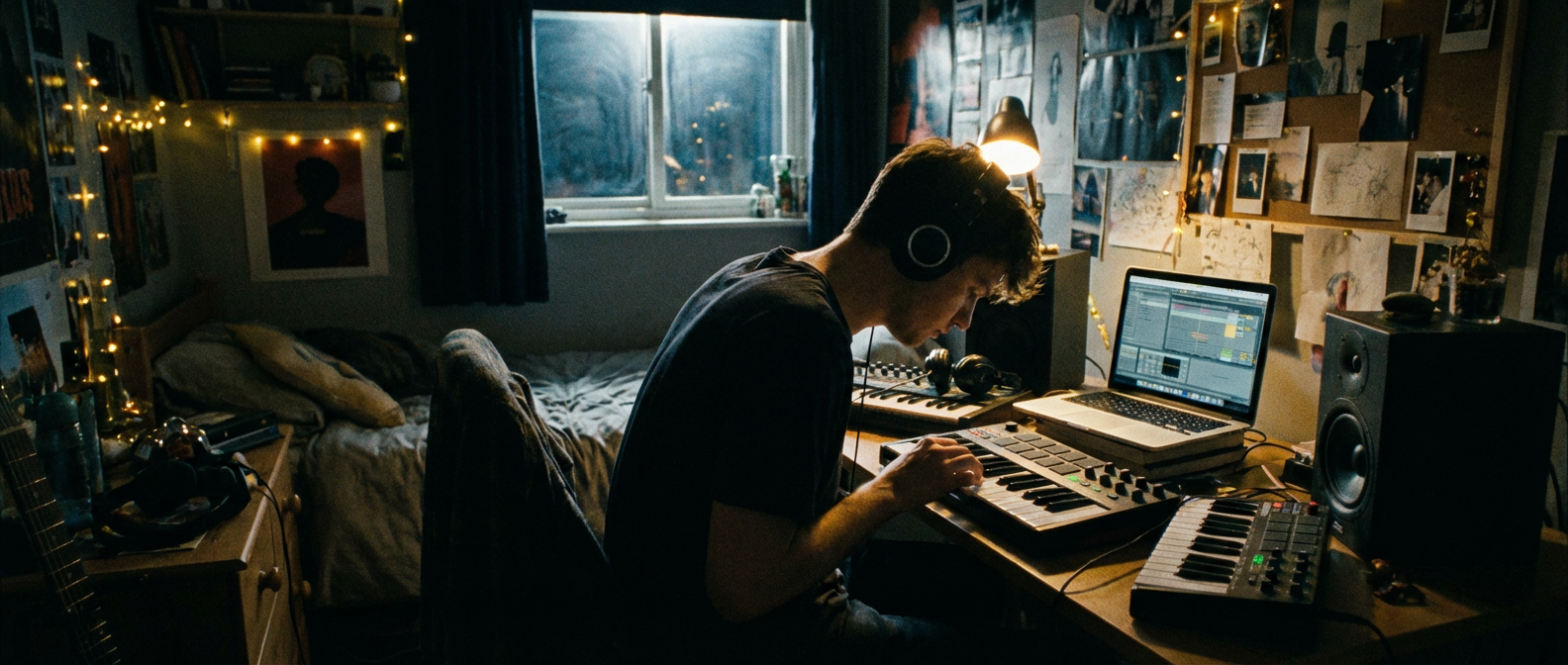
The bedroom has died as a private space, transformed into something far more important. What was once a refuge from the world became its stage, where a generation of artists tore down the fortress walls of traditional music production. By 2025, nearly three-quarters of all music reaching Spotify came from these intimate spaces, recorded not in legendary studios but in converted closets, spare rooms, and dorm rooms across the globe.

This massive shift is more than just technological convenience. It’s the end of an era when geography determined artistic possibility, when living close to recording facilities decided who could participate in musical conversation. The bedroom pop movement, with its lo-fi aesthetics and dreamy textures, became the unlikely vehicle for this democratization. What started as nostalgic pastiche grew into something bigger: a complete reimagining of how music gets made and who gets to make it.
Digital Audio Workstations like Ableton Live, FL Studio, and Logic Pro X removed the last financial barriers to professional-quality production. These platforms, once expensive and technically demanding, became as easy to use as word processors. The result wasn’t just more music, but fundamentally different music, shaped by the limitations and possibilities of domestic spaces rather than commercial studios.

The Suburban Hit Factory
Bedroom pop achieved something remarkable: sustained commercial relevance without sacrificing artistic integrity. Since 2019, the genre has consistently produced Billboard-charting artists, defying industry expectations about what resonates with mainstream audiences. Artists like Clairo, Rex Orange County, and Boy Pablo transformed intimate bedroom recordings into arena-filling anthems, proving that polish and production budgets weren’t prerequisites for widespread appeal anymore.
This success reflected broader cultural shifts toward authenticity and intimacy in an increasingly mediated world. The imperfections inherent in home recording setups became features rather than bugs, with tape hiss and room tone adding warmth that sterile studio environments often lack. Pitchfork music criticism regularly celebrated these sonic signatures, recognizing them as deliberate aesthetic choices rather than technical limitations.
The genre’s commercial viability also came from its visual and cultural coherence. Bedroom pop offered a complete aesthetic package: sun-drenched imagery, vintage equipment worship, and a carefully curated nostalgia that worked perfectly across social media platforms. This visual language proved as important as the music itself, creating a lifestyle brand that extended far beyond just listening to songs.
The Sample Wars and Creative Constraints
The democratization of music production created new tensions around intellectual property and creative ownership. As bedroom pop artists began incorporating samples from classic records, they hit the harsh realities of clearance costs that major labels had long navigated with ease. Independent artists found themselves priced out of using the very materials that inspired their work, creating a two-tiered system where major label artists could freely sample while bedroom producers faced legal obstacles.
This disparity sparked creative workarounds that ultimately made the genre richer. Unable to clear expensive samples, bedroom pop artists developed sophisticated techniques for creating sample-like textures from original recordings. They learned to recreate the warmth of vintage recordings through careful manipulation of digital tools, essentially reverse-engineering the sonic qualities they couldn’t legally access.
AI tools for stem separation complicated this landscape further, enabling widespread unauthorized remixing and sampling. These technologies, which could isolate individual instruments from existing recordings, created a gray market of unofficial remixes and mashups that thrived on streaming platforms despite questionable legal standing. The result was a flourishing underground ecosystem that operated parallel to official release channels.
Industry responses varied wildly, from aggressive takedown campaigns to reluctant acceptance of AI-enabled creativity. Sound on Sound production coverage of these developments revealed deep uncertainty about how copyright law would adapt to rapidly evolving technology, leaving artists to navigate an increasingly complex legal landscape.
Vinyl’s Resurrection and the Analog Paradox
Maybe no trend better captured bedroom pop’s contradictions than vinyl’s remarkable commercial comeback. For the third consecutive year in 2025, vinyl sales outperformed compact discs, creating a strange feedback loop where digitally-native bedroom pop artists found their greatest commercial success through the most analog format possible. This wasn’t just nostalgia marketing but reflected genuine consumer desire for physical connection to music in an increasingly ephemeral digital world.
The vinyl revival also influenced how bedroom pop artists approached their craft. Knowing their work might eventually exist on wax encouraged attention to album-length coherence and dynamic range considerations that streaming algorithms typically ignored. Artists began thinking in terms of sides and flow, concepts that seemed obsolete in the playlist era but proved surprisingly relevant to contemporary audiences seeking immersive listening experiences.
Record pressing delays and supply chain constraints added another layer of complexity to this analog renaissance. Bedroom pop artists often waited months to receive physical copies of their own albums, creating strange situations where digital releases came out months before physical copies. These delays became part of the culture, building anticipation and scarcity value around physical releases.
Legacy of the Intimate Revolution
Bedroom pop’s real legacy isn’t in its specific sonic characteristics but in its proof that meaningful music culture could emerge from the most modest circumstances. The genre showed that limitations often generate creativity more effectively than unlimited resources, that constraint breeds innovation rather than stifling it. The bedroom became a metaphor for artistic self-sufficiency, challenging assumptions about what artists needed to create compelling work.
This movement also redefined the relationship between technology and creativity. Rather than viewing digital tools as poor substitutes for analog equipment, bedroom pop artists embraced the unique possibilities of home recording technology. They found beauty in digital artifacts, warmth in compressed audio, and intimacy in close-miked vocals that would have been considered unprofessional in previous eras.
The cultural impact extended beyond music production techniques to influence how artists build careers and connect with audiences. Social media platforms became as important as streaming services, with visual aesthetics and personal branding playing huge roles in artist development. The bedroom pop model offered a template for creative independence that influenced artists across genres and mediums.
Looking at this transformed landscape, the questions that remain aren’t technical but cultural. How do we preserve the intimacy that made bedroom pop special as it continues to scale? Can the DIY ethos survive its own success? The answers will shape not just a genre but the entire ecosystem of contemporary music creation, making bedroom pop’s ongoing evolution essential viewing for anyone interested in where music culture goes next.